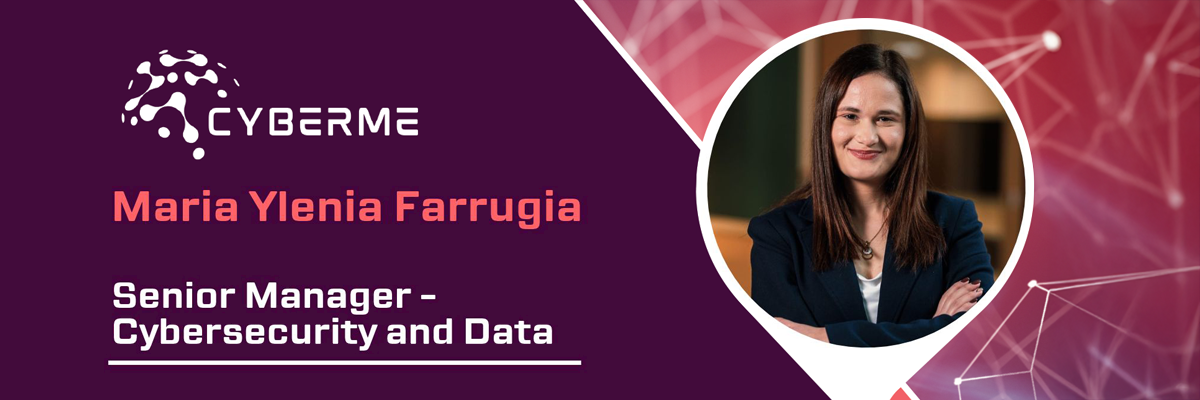
Role Model: Maria Ylenia Farrugia
Personal Details
- Title, Name, Surname: Ms. Maria Ylenia Farrugia
- LinkedIn Profile: https://www.linkedin.com/in/maria-ylenia-farrugia-565447109/
- Link and information to any initiatives you are involved in that relate to empowering women in ICT: Motivational sessions to school students for career in ICT: https://www.facebook.com/reel/2140180106732223 Participation as a speaker during the business and professional women Malta’s event: https://bpwmalta.com/bpw-european-conference-2025/speakers/
Expertise
- Your role/job title: Senior Manager (Cybersecurity and Data)
- Company name: Malta Digital Innovation Authority (MDIA)
- What is your field of expertise? Regulatory affairs in particular the implementation of European Union cybersecurity and data regulatory frameworks. My expertise spans regulatory strategy, quality and conformity assessment, with a focus on strengthening digital trust, cyber resilience and responsible innovation.
Company details
- LinkedIn: https://mt.linkedin.com/company/malta-digital-innovation-authority
- Facebook: https://www.facebook.com/MDIAmalta
- Link (and information) to any initiatives your company may lead that relate to empowering women in ICT. https://www.facebook.com/reel/2140180106732223
https://bpwmalta.com/bpw-european-conference-2025/speakers/
Introduction
Please tell us a few things about yourself.
I am a Senior Manager specialising in cybersecurity and data at the Malta Digital Innovation Authority, with a strong background in regulatory affairs, cybersecurity and data governance. I am passionate about working at the intersection of technology, regulation and policy, particularly where these areas can contribute to building trust, strengthening resilience and supporting responsible innovation.
I engage closely with national and European stakeholders, translating complex technological and regulatory developments into practical frameworks that protect people and organisations and strengthen digital trust.
Alongside my professional experience, I hold a Master of Science, an MBA and an ISO 9001 and ISO/IEC 27001 Lead Auditor Certificate, providing me with a strong foundation in quality and information security governance alongside my regulatory experience.
Inspiration
What motivated you to enter the cybersecurity field, and how can we make that journey more accessible and visible to young women today?
I was drawn to cybersecurity because it combines technology, regulation and public interest. Cybersecurity is ultimately about protecting what people and organisations value, including their data, services, reputation, operations and trust.
The field is constantly evolving and there is always something new to learn and a new challenge to address. I was particularly motivated by the opportunity to contribute to frameworks that make technology safer and more trustworthy, not only at organisational level but also nationally and across the European Union.
To make this journey more accessible to young women, we need to make the different career pathways more visible. Cybersecurity should not be presented as a field reserved only for programmers or technical specialists. It also requires policy experts, auditors, risk professionals, lawyers, communicators, project managers, researchers and ethical thinkers.
Young women need opportunities to meet people already working in these roles and participate in practical activities. School visits, mentoring, internships, workshops and real-life stories can help transform cybersecurity from an abstract concept into a realistic and achievable career option.
Career Growth
Beyond technical knowledge, which soft skills - such as teamwork, problem-solving, or ethical awareness - are most valuable in your day-to-day work?
One of the most valuable skills in my day-to-day work is the ability to communicate complex issues clearly. Cybersecurity professionals frequently need to explain risks, legal obligations and technical requirements to audiences with very different levels of knowledge. Being precise while remaining understandable is essential.
Problem-solving and critical thinking are equally important. Cybersecurity rarely presents straightforward answers. Professionals must assess different sources of information, identify risks, consider the wider implications and make balanced decisions.
Teamwork is also fundamental because cybersecurity cannot be managed in isolation. It requires cooperation between technical experts, policymakers, regulators, businesses, public authorities and international partners.
Finally, ethical awareness is indispensable as decisions involving cybersecurity and data can affect privacy, safety, access to services and public trust.
Memorable Achievements
Share a project or moment that reflects the impact of your work.
One of the most significant achievements of my career has been contributing to the establishment of Malta’s national cybersecurity certification function following the designation of the Malta Digital Innovation Authority as the National Cybersecurity Certification Authority.
I am especially proud that the project went beyond fulfilling a regulatory obligation. It strengthened Malta’s cybersecurity readiness, contributed to the wider European cybersecurity certification ecosystem and created a practical model. It demonstrated how strategic regulation, multidisciplinary collaboration and continuous investment in expertise can deliver a lasting national and European impact.
Seeing this work contribute to the wider European framework has demonstrated how expertise, collaboration and constructive engagement can enable Malta to play an active and meaningful role in shaping regulatory developments at European level.
Another rewarding part of my work is translating new cybersecurity and digital requirements into practical information for organisations. Helping stakeholders understand how regulatory readiness can strengthen resilience, trust and competitiveness demonstrates that regulation should not be viewed merely as a compliance exercise. When approached effectively, it can become a foundation for sustainable innovation and customer confidence.
Challenges
How do you stay ahead in a competitive field, and what obstacles have you overcome?
Cybersecurity changes continuously, and I would say that this is both the biggest challenge and one of the things I enjoy most about the field. New technologies, threats, regulatory requirements and business models emerge rapidly, so what you know today constantly needs to evolve.
One challenge has been learning to navigate this complexity without looking at issues through only one lens. My work increasingly sits at the intersection of cybersecurity, data, regulation, policy and technology, and understanding how those areas interact is essential.
I stay ahead by following European and international developments, engaging in expert discussions, learning from colleagues and stakeholders, and continuously expanding my knowledge. Over time, I have also learnt that you do not need to have every answer immediately. What matters is knowing how to approach a new challenge, ask the right questions, bring together the right expertise and keep learning.
That mindset has helped me turn the pace of change from an obstacle into an opportunity for continuous professional growth.
Work-Life Balance
How do you manage the demands of career and personal life?
I manage my professional and personal commitments by setting clear priorities, staying organised and recognising that balance can look different from one day to the next. Some periods naturally require greater professional focus, particularly around important deadlines and deliverables, and I see this as part of working in a dynamic and rewarding field.
Good planning helps me remain focused while also making time for my personal life. For me, work-life balance is about being adaptable, making conscious choices and maintaining the energy and perspective needed to perform at my best both professionally and personally.
Personal motive
What’s your personal motto, or favourite motivational quote, that can also inspire the younger generation to follow studies and a career in an ICT / Cybersecurity field?
“You do not need to see the entire path to take the first step.”
Young people can sometimes feel that they need to have their whole career planned before choosing an ICT or cybersecurity pathway. In reality, careers develop through experience, curiosity and the willingness to try.
My message to the younger generation is not to wait until you feel completely ready. Ask questions, explore different subjects, take opportunities and do not allow the fear of making mistakes to prevent you from beginning. Technology needs different perspectives, and your perspective may be exactly what the field is missing.
Future
Which emerging areas in cybersecurity, such as AI security, data protection, or social engineering, will be most relevant for the next generation of professionals entering the field? And what role can gender diversity and inclusion play?
Artificial intelligence security will be one of the most significant areas for the next generation. Professionals will need to understand how AI systems can be attacked, manipulated or misused, as well as how AI can support threat detection, risk analysis and incident response.
The security of connected products and software will also become increasingly important. As technology becomes embedded in homes, businesses, healthcare, transport and critical services, cybersecurity will need to be considered throughout the entire lifecycle of a product, rather than added only after something goes wrong.
Data protection and data governance will remain central because AI and other emerging technologies depend heavily on reliable and responsibly managed data. Professionals will need to understand not only how to protect data, but also how to ensure that it is used lawfully, ethically and transparently.
Social engineering will continue to be a major challenge. Even sophisticated technical safeguards can be undermined when individuals are manipulated into sharing information or granting access. The next generation will therefore need expertise in human behaviour, communication, awareness and organisational culture, alongside technical skills.
Gender diversity and inclusion have an important role in all these areas. Cybersecurity solutions affect everyone, so the teams designing policies, products and safeguards should reflect the diversity of the people they protect. Different experiences and perspectives can reveal risks, assumptions and unintended consequences that might otherwise be overlooked.
Inclusion is not only a question of fairness. It strengthens problem-solving, innovation and decision-making. By helping individuals of all genders enter, remain and progress within cybersecurity, we can build a profession that is more representative, more creative and better equipped to respond to the complex challenges ahead.